Copper and Copper Alloy Wires
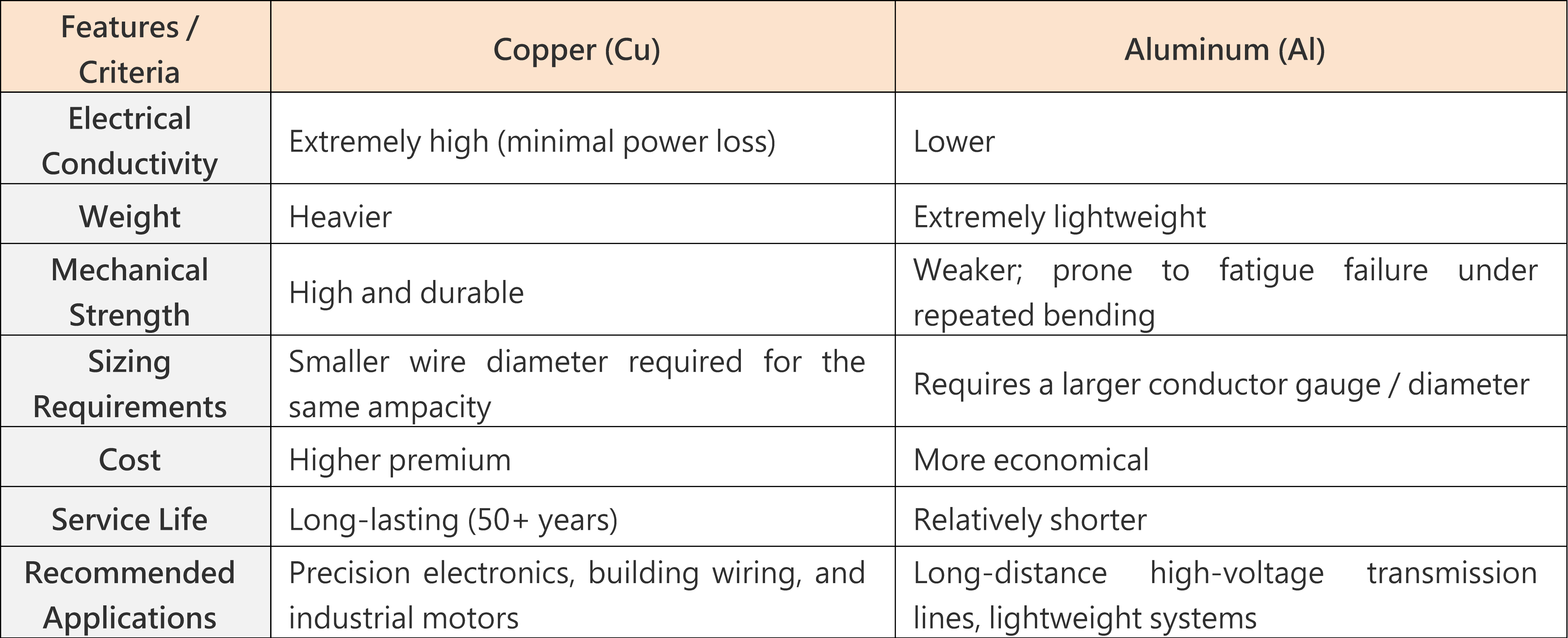
Copper and copper alloy wires exhibit excellent electrical and thermal conductivity, ductility, corrosion resistance, and workability. Depending on specific application requirements, options include pure copper wire, brass wire, bronze wire, phosphor bronze wire, cupronickel wire, and specialty copper alloy wires.
These products are ideally suited for electronics and electrical engineering, terminals, connectors, spring components, precision hardware, welding consumables, telecommunication equipment, automotive components, and industrial processing.
1. Classification by Material
▪ Pure Copper Wire
▪ Copper Alloy Wire
▪ Specialty Copper Wire (e.g., tinned copper, silver-plated copper, etc.; can be listed separately)
2. Classification by Alloy System
▪ Brass Series (Cu-Zn)
▪ Bronze Series (Cu-Sn / Cu-Al)
▪ Cupronickel Series (Cu-Ni)
▪ Other Specialty Copper Alloys
3. Classification by Temper
▪ Soft / Annealed (O)
▪ Half-Hard (1/2 H)
▪ Hard / Hard-Drawn (H)
4. Classification by Application
▪ Electronic Wire
▪ Electrical Wiring
▪ Grounding / Earthing Conductors
▪ Braided & Stranded Wires
▪ Specialty Conductive Applications
I. Fundamental Properties and Characteristics of Copper
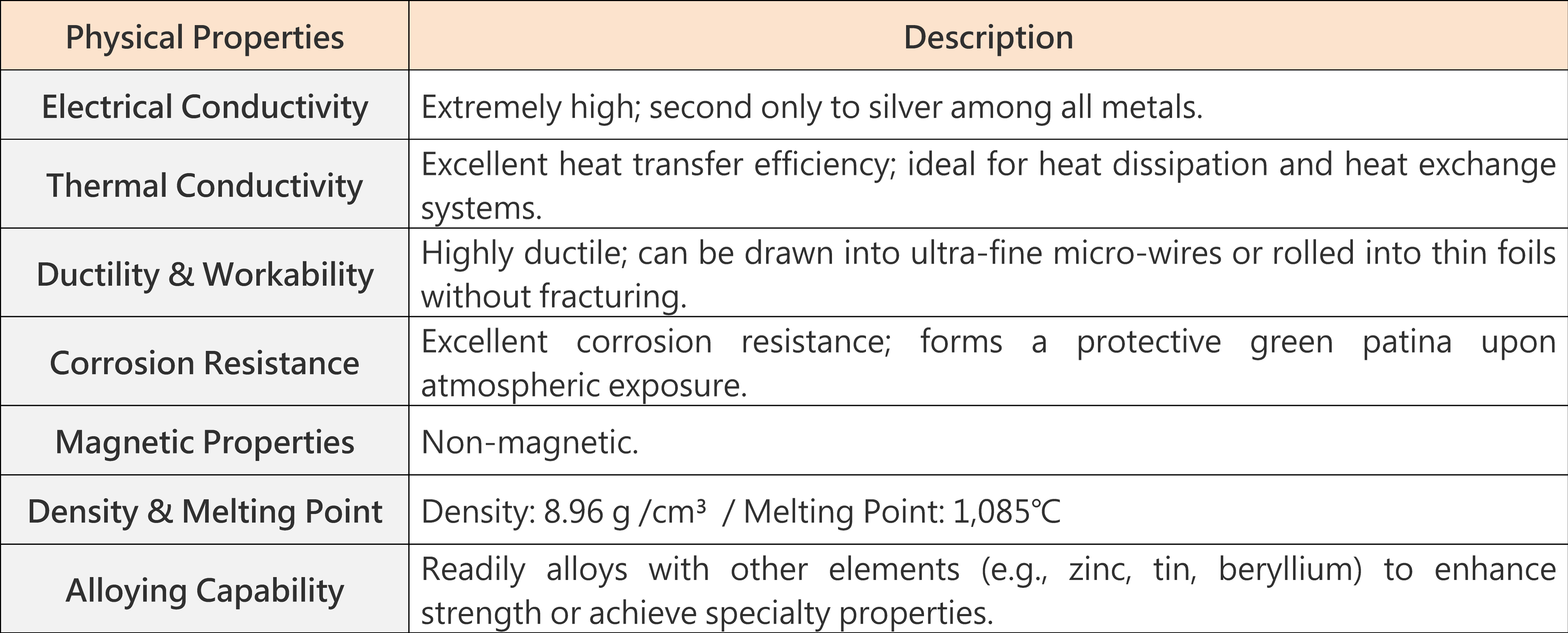
Copper has an atomic number of 29 in the periodic table of elements and exhibits a face-centered cubic (FCC) crystal structure. Its distinct physical and mechanical properties make it stand out among industrial metals:
II. Copper Wire Manufacturing Process Flow
From raw ore to high-quality wire, copper undergoes a series of precise, multi-step processes:
-
Extraction & Refining: Copper is extracted from ore and refined to eliminate impurities, producing high-purity copper cathodes.
-
Melting & Casting: Pure copper is melted and cast into large shapes (such as continuously cast rods), serving as the raw material for wire production.
-
Rolling (Rod Forming): The cast copper is processed through rolling mills into elongated, thicker wire rods.
-
Wire Drawing: The copper rod is pulled through a series of drawing dies with progressively decreasing diameters to gradually reduce its cross-section and elongate it into wire.
-
Annealing (Softening Treatment): The drawing process induces work hardening in the copper wire. A controlled annealing process restores its ductility and toughness, making it pliable and ready for installation.
-
Insulation (Optional): Depending on the end-use, the copper wire is coated with PVC, rubber, or an enamel film.
-
Quality Testing: Conductivity, tensile strength, dimensional accuracy (diameter tolerances), and surface quality are verified to ensure full compliance with industry standards (such as ASTM B3).
III. Types of Copper and Copper Alloy Wires
Based on electrical conductivity, mechanical strength, and environmental adaptability, copper wires are classified into baseline types and advanced alloy wires: