Copper-Nickel-Zinc(Nickel Silver)Alloy Rods
Nickel silver (often referred to as German silver) gets its name from its bright silver appearance, even though it contains absolutely no silver. Nickel silver is a copper-nickel-zinc alloy, to which a small amount of lead (1–2%) is sometimes added to achieve a free-machining grade.
It is commonly suitable for household items (such as tableware) and can also be applied to certain industrial uses. When the nickel content exceeds 18%, the corrosion resistance of the nickel silver alloy increases accordingly, making its resistance to stress corrosion cracking superior to that of some brass alloys.
Silver-nickel alloys, on the other hand, are silver alloys made by adding nickel to silver. Adding a small amount of nickel can refine the grain structure, increasing the hardness, wear resistance, and arc erosion resistance of the silver, with only a slight increase in contact resistance. Since silver and nickel are mutually insoluble, these alloys are prepared via powder metallurgy, typically with a nickel content ranging from 5% to 40%. Silver-nickel alloy electrical contact materials possess excellent electrical and thermal conductivity, with strong resistance to metal transfer, arc erosion, and electrical wear. They offer good wear resistance, high strength, excellent ductility, and good machinability, though their contact resistance is slightly higher than that of pure silver.
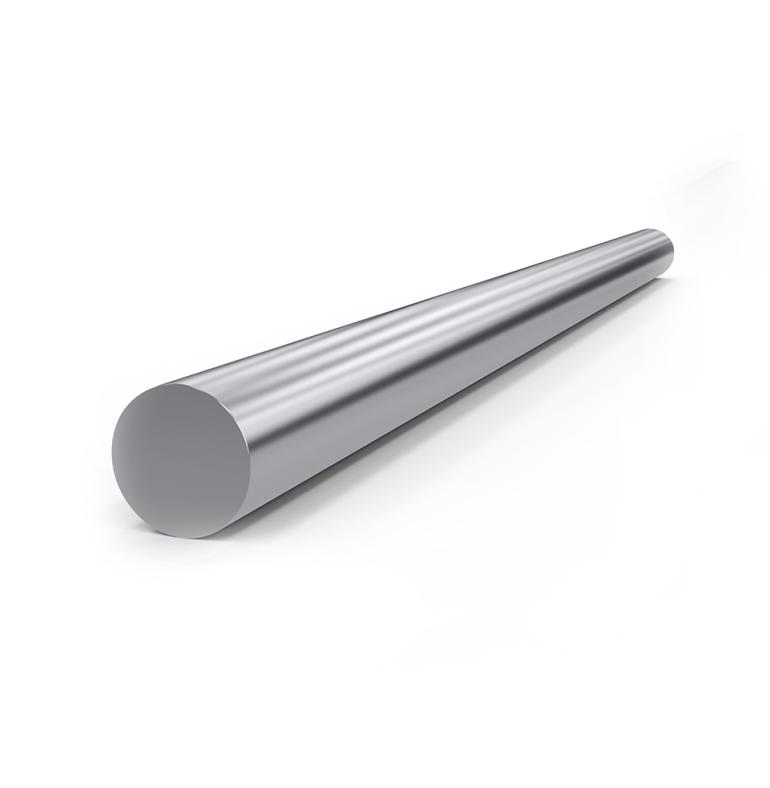
Nickel silver alloy rods can be utilized in many different applications. The markets that widely use nickel silver alloy rods include the oil, gas, and mining industries, as well as the musical instrument manufacturing industry.
Silver-nickel alloys’ characteristics can be improved by adding rare-earth elements. Silver-nickel is often used in low-volt electrical appliances.
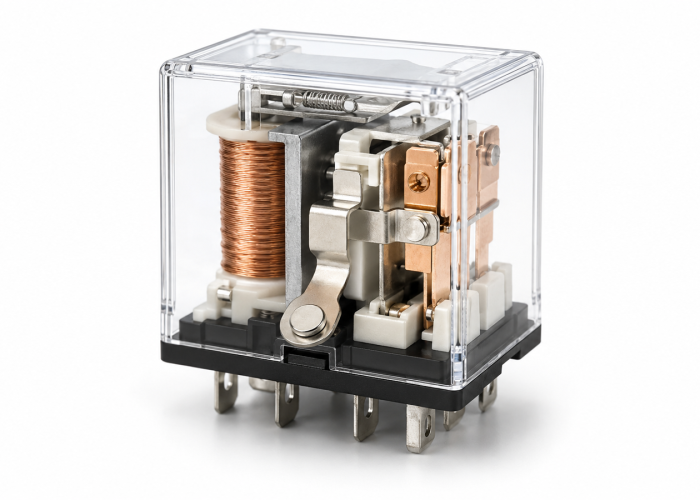
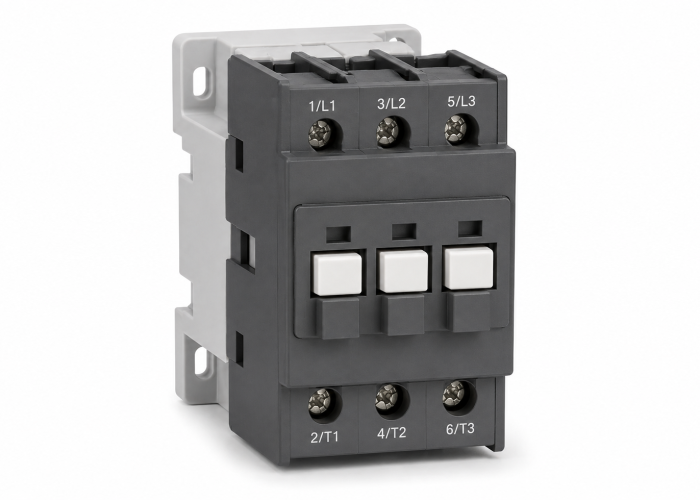
AgNi10 is used for AC relay that can undergo current less than 20A. However, relays made of AgNi (15~40) can bear higher loads. Silver-nickel alloys are extensively used to make probes, switches, control unit, voltage regulator, over-relay, electrical appliances for cars, magnetic-drive starters,…etc.
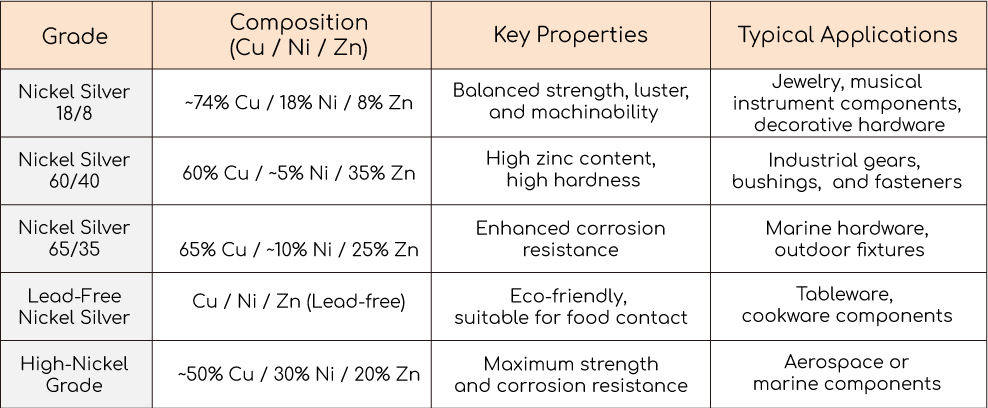
Common Applications of Nickel Silver Rods
Musical Instrument Components:
Nickel silver is widely used for valves, slides, mouthpieces, and related accessories in brass instruments such as trumpets, saxophones, and trombones. Its excellent corrosion resistance and refined surface finish make it ideal for musical instrument parts requiring long-term durability and a premium appearance.
Jewelry and Accessories:
Featuring a metallic luster close to pure silver, nickel silver is commonly used in jewelry, belt buckles, watch cases, nameplates, and decorative ornaments. It achieves a visual effect similar to silver products but at a relatively lower cost.
Tableware and Everyday Household Goods:
Nickel silver is utilized in premium tableware, serving utensils, home decor, and polished aesthetic parts. Its superior corrosion and tarnish resistance allow it to maintain a bright, clean metallic texture.
Hardware and Decorative Parts:
Nickel silver can be applied to door handles, locks, zipper components, decorative hardware, and various exterior trim parts. It combines metallic brilliance with durability, making it perfectly suited for products that demand both aesthetics and functionality.
Electrical and Electronic Components:
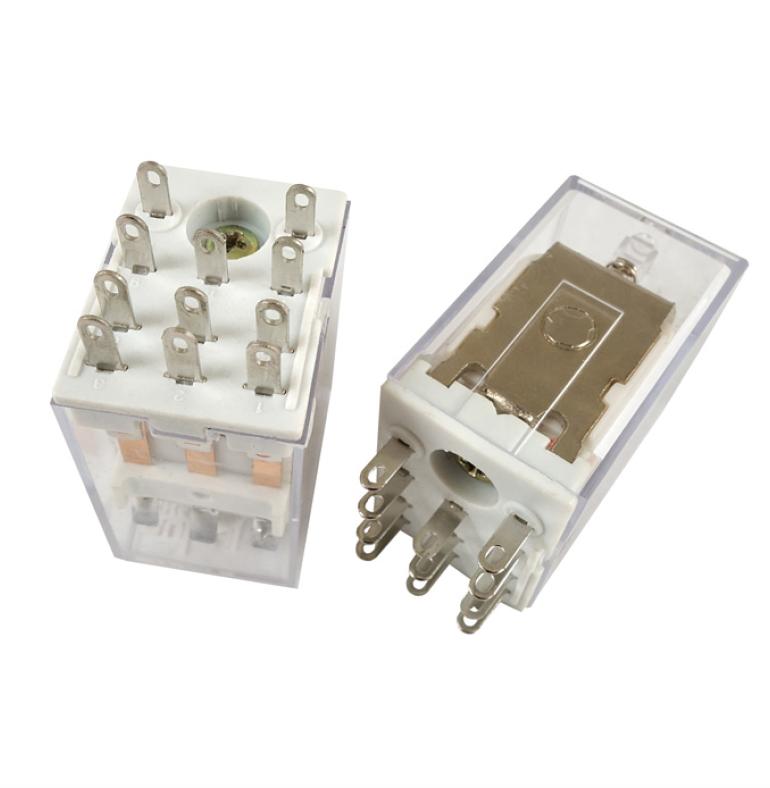
With moderate electrical conductivity, strength, and dimensional stability, nickel silver is frequently used in switch components, connectors, terminals, relay parts, and electronic contacts.
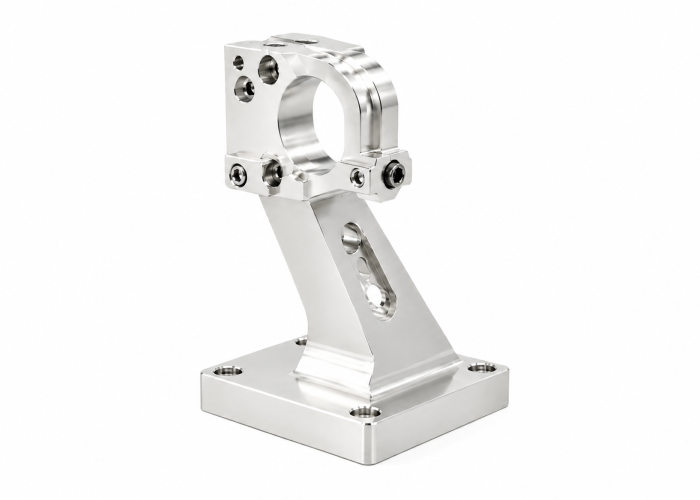
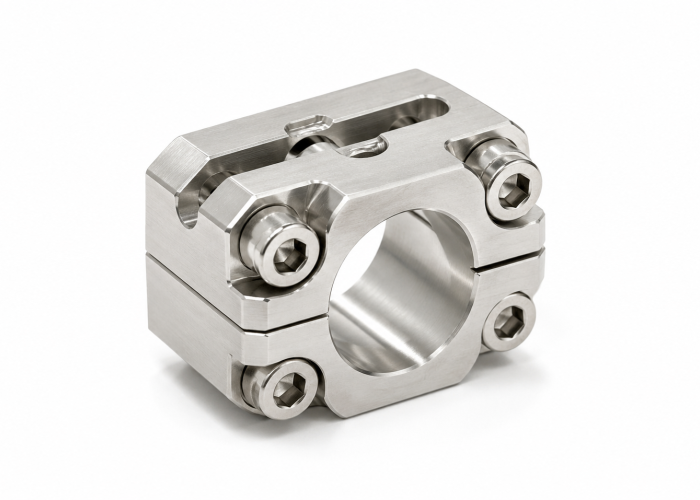
Precision Machined Parts:
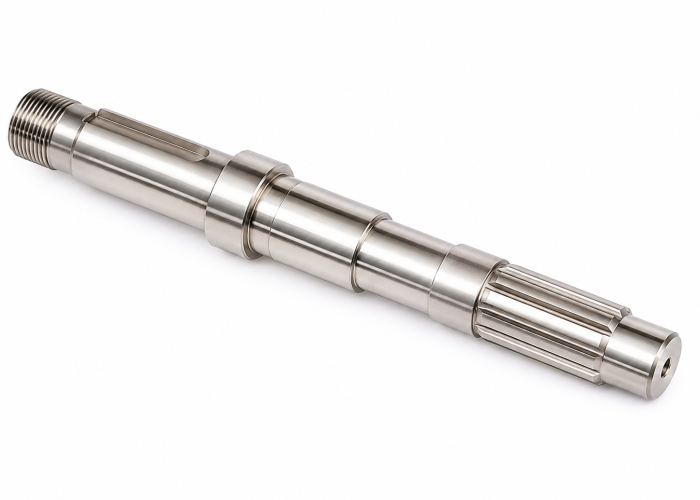
Nickel silver offers excellent machinability, making it ideal for precision turned parts, screws, rivets, bushings, instrument parts, and optical components. When free-machining nickel silver is used, it becomes even more suitable for automatic lathes and high-volume part production.
Advantages of Nickel Silver
Excellent Silver-White Appearance:
Nickel silver possesses a natural metallic luster that closely resembles pure silver, providing a premium aesthetic appeal. It is highly suitable for products requiring a brilliant metallic texture, effectively reducing the need for subsequent electroplating or surface treatments.
Superior Corrosion and Tarnish Resistance:
Compared to standard brass, nickel silver delivers significantly better corrosion and tarnish resistance. This makes it ideal for use in humid environments, exterior components, decorative hardware, and precision parts.
Excellent Workability:
Nickel silver can undergo stamping, cold forming, deep drawing, machining, and precision fabrication. It is perfectly suited for manufacturing components with complex geometries or strict dimensional tolerances.
Cost-Effective Advantage:
While delivering a visual effect similar to silver products, the cost of nickel silver is typically much lower than that of sterling silver or precious metals. Consequently, it is widely utilized in jewelry, tableware, decorative items, and cosmetic components.
Good Strength and Wear Resistance:
Nickel silver features reliable mechanical strength and wear resistance, allowing it to withstand daily use and repeated operations. It is highly suited for musical instrument components, hardware, instrument parts, and precision machined components.
Disadvantages of Nickel Silver
Lower Electrical Conductivity:
Nickel silver is not a high-conductivity material, making it unsuitable for high-conductivity wires or high-performance conductive components. If electrical conductivity is the primary requirement, copper, silver, or high-conductivity copper alloys are typically preferred.
Susceptibility to Work Hardening:
Nickel silver gradually hardens during cold working or repeated forming processes, leading to a decrease in ductility. If subsequent processing is required, an annealing treatment may be necessary to restore the material's ductility.
Potential to Cause Nickel Allergy:
Because nickel silver contains nickel, caution must be exercised when using it for products that come into direct, prolonged contact with the skin—such as jewelry, watch cases, or accessories—as some users may experience an allergic reaction to nickel.
Higher Cost Than Standard Brass:
Due to its nickel content, the material cost of nickel silver is generally higher than that of standard brass, although it remains significantly lower than precious metals like sterling silver.